Slab foundation building in Helena MT - a level base built for Helena winters
House plans call for a slab, but the lot's still raw ground? We dig, pack and pour the footings and slab your home sits on.
- Licensed and insured.
- Free in-person estimates.
- Replies within 1 business day.
What goes into a slab foundation for a Helena home?
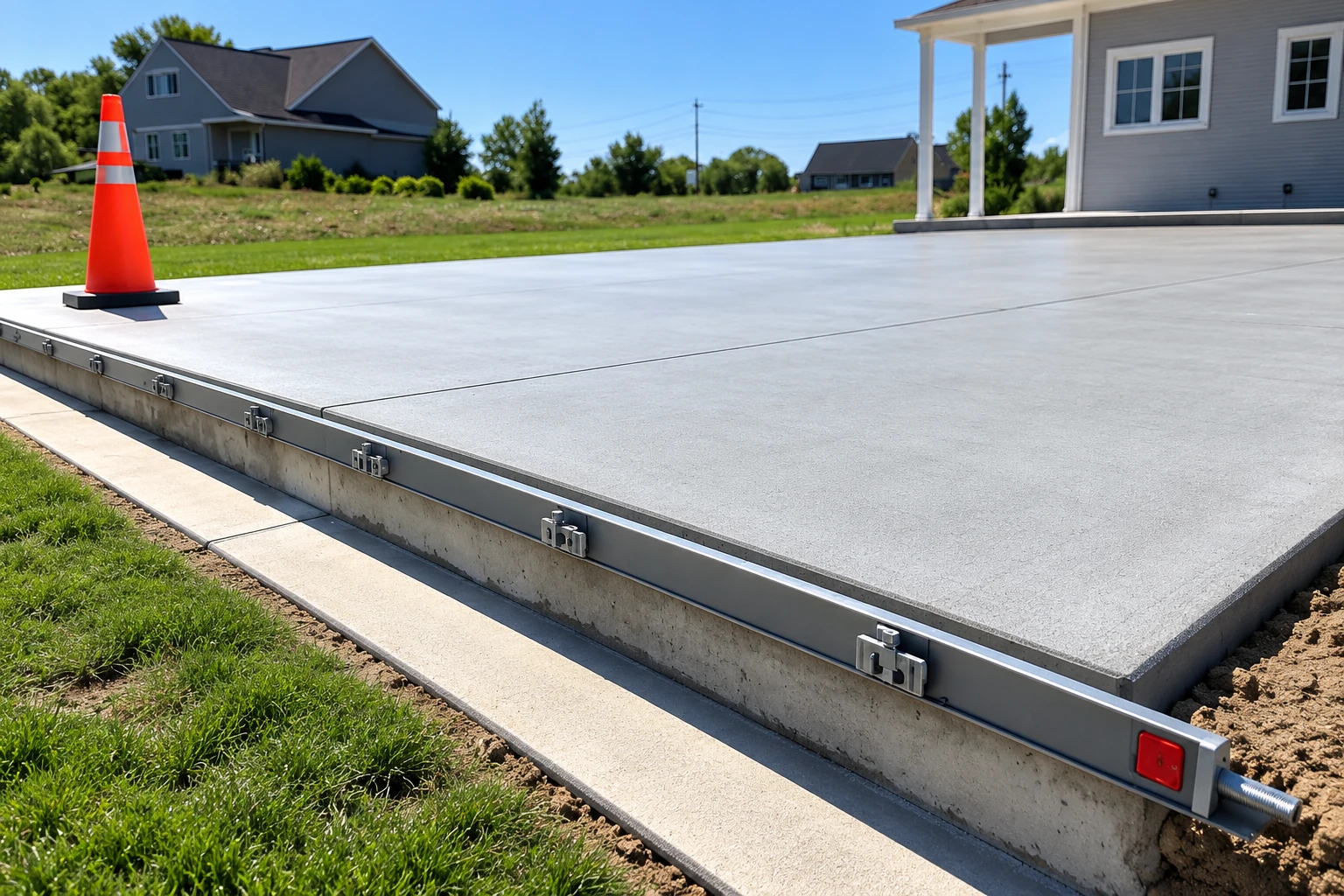
Slab foundation building in Helena, MT means pouring the concrete footings and slab that a slab-on-grade home rests on, set to the frost depth the city lists so the house starts on a base built for winter.
You've probably got house plans and a lot, and now you need someone to put the base under them. The price mostly comes down to the footing method and how deep it goes, the size of the home and how much digging and fill the lot needs. The schedule turns on the method, the permit for your address and the weather on pour day. We plan the concrete footings and the slab together, and the estimate gives you the figure for your own lot.
How do you know your build needs a slab foundation?
Plans show slab-on-grade
If your house plans show the home sitting right on a slab with no basement or crawlspace, the footings and slab are the first thing that gets built. Settle the footing method before anyone digs, because changing it once forms are up means tearing out work.
Water sits on the lot
Puddles or soggy ground where the house will go after rain or snowmelt usually mean the drainage has to be worked out before the pour. Skip that step and you can end up with a slab that sends water toward the house for as long as it stands.
The ground slopes or dips
A lot that falls away or has low spots needs more digging, fill and packing to give the slab a firm, level start. Waiting to deal with it until pour day usually means delays and a bigger bill for fill.
How we handle slab foundation building
I start by walking the lot with you and going over the footing options, because the method we pick shapes how deep we dig and how the schedule runs, and if you want radon features we plan them in now rather than fitting them in later. Then we dig out the footings and slab area, pack the subgrade, the ground the slab sits on, in layers so it doesn't settle like loose dirt, and check where the water runs so the finished slab sheds it away from the house. We set forms and rebar, the steel inside that holds the concrete together if it cracks, pour early in the day so heat doesn't leave a weak, dusty top, and cut control joints, shallow grooves that tell the slab where to crack, before it sets too hard to cut clean. Curing comes last, a wait while the concrete gains strength before anyone builds on it. If the budget gets tight, I'll tell you plainly to trim somewhere other than the base, because nobody sees the groundwork once the slab is down and it's the one part you can't go back and fix.
A slab is one kind of foundation installation, so if your plans change to a crawlspace or stem walls, we can build that instead. Builders with a commercial site sometimes have us handle concrete parking lot building on the same job, since the packed base and drainage work carries over to ground that takes traffic.
Footings dug to full depth
This suits most lots, and any build where the plans or the site call for a standard footing below the frost line. It means more digging and concrete, but it's the familiar approach and handles steeper ground well.
Insulated shallow footing
This is worth talking through for a slab-on-grade home on fairly gentle ground, because insulation keeps the soil at the edges from freezing so the footing can sit shallower. Whether it fits your lot is something we work out together at the estimate.
Slab with radon features built in
This suits anyone who wants radon-resistant work in the house, since we lay out what goes under the slab and where the pipe runs before we pour. Doing it at the start keeps it out of the way of the framing crew later.
Get a slab foundation estimate for your Helena lot
We reply within one business day to set a time. I come out, walk the lot and write a free estimate on site, and there's no obligation to go ahead.
- Based in
- Helena, MT 59601
- Hours
- Mon–Fri: 7 AM–10 PM, Sat–Sun: 6 AM–11 PM
What happens after you call about a slab foundation?
Here's how a slab foundation job runs with us, from your first call to the day we pack up the tools and leave.
Call or send the form
Tell us about the lot and the home you're planning, and we'll set a time to meet. Having the property address and knowing whether it's inside Helena city limits helps us get started.
I walk the lot with you
I come out myself, walk the site, listen to what you want and write up the estimate. It lays out the footing method we'd use, what the digging involves and what's driving the price, so you can compare it fairly.
We line up permits and weather
If you go ahead, we sort out the permit side for your address and plan the pour around the forecast. Cold snaps and midday heat are both hard on fresh concrete, so the date can move with the weather.
We pour, then clean up
My crew and I do the digging, base, forms and pour, then clean up the site when we're done. Before we leave, we'll tell you how long the slab needs to cure before framing starts.
Why Helena builders and homeowners call Helena Concrete for slabs
The owner walks your lot
I come out myself to look at the job and write the estimate, then I work on it alongside a small crew. You deal with the same person from the first visit to cleanup, so nothing gets lost between whoever sold the job and whoever pours it.
Learned on Helena crews
I grew up pouring concrete beside my dad around Helena and started this business in 2021 after years on his crews. He taught me to slow down on the prep and keep my word on the small stuff, and that's still how we run a slab.
Licensed and insured on every job
Ask to see the paperwork before anything gets dug, and we'll have it ready for you. On a foundation that matters more than most jobs, because the work ends up under your whole house.
On a slab foundation, the part that matters most gets buried on day one. Send us your lot details or call (406) 324-9341 to set up a visit.
Building slab foundations and footings around Helena
Inside Helena city limits, the city's building official issues permits to build a building or structure, and the city's list of work that can skip a permit names things like sidewalks and driveways, not slab foundations, so check with the city before anything gets dug. Outside city limits it depends on where the lot sits, because Montana lets cities and counties run their own code programs certified by the state Building Codes Program, and areas that chose not to enforce codes fall under the state program instead. We find out which office covers your address and take care of the permit paperwork when the job calls for one.
We're based in Helena and work across the cities around it in the valley, where a lot of new home sites have snowmelt and summer storm water running across open ground. We check where that water goes before the forms go up, and we see the same thing on jobs in Helena Valley Southeast and Helena Valley Northwest.
Questions about slab foundations in Helena
How deep do slab foundation footings have to go in Helena, MT?
The City of Helena lists a frost depth of 42 inches minimum to the bottom of a footing. That depth sets how far down we dig and how much concrete the footings take, so it's one of the first things we size up on your lot.
Is there a shallower insulated foundation option for a slab home in Montana?
Yes, a frost-protected shallow foundation uses insulation placed around it to keep the ground warm, and the builder's guide on these says that allows footings as shallow as 16 inches across almost all of the continental US. The guide calls it most suitable for slab-on-grade homes on moderate to low slopes, so ask us to set it beside the depth the city lists for your lot and see how the two compare.
How long does it take to build a slab foundation?
It depends on the method, the lot and the weather, and you'll get a clearer picture once I've walked the site. The builder's guide says a frost-protected shallow slab can go in with one placement of concrete, which leaves fewer steps to schedule than footings poured separately from the slab.
How much does a slab foundation cost in Helena?
The price comes down to the footing method and depth, the size of the home, the slope of the lot and how much digging and fill it needs, so the real number comes from an estimate on your lot. Radon features are worth planning into that number early, since the EPA says building them in typically costs a builder less than fixing the house after it's built.
What is the best way to keep moisture out of a slab foundation floor?
For a floor inside the house, plan on a vapor retarder under the slab, a layer that slows moisture coming up from the ground, because a concrete industry sheet calls one sensible planning under every interior floor slab. Outdoor slabs generally go without one, so it comes down to whether the slab will be a floor you live on.
Does a slab foundation contractor need a Montana license?
Yes, all construction contractors in Montana are now required to be licensed with the Montana Department of Labor & Industry. Ask any contractor you're weighing for theirs before you sign, since a foundation is the last place to find out too late.
Related services for your build
Foundation installation
If your plans call for a crawlspace, stem walls or another type of foundation, this covers the base under the home when a flat slab won't work.
Concrete parking lot building
Builders putting up a shop or commercial building often need paved parking too, and it's the same packed base and drainage work done on a bigger scale.
Service areas for slab foundation work
Helena Concrete is based in Helena, MT, and we pour slab foundations across Helena and the cities around it in the valley. That includes Helena Valley Southeast and Helena Valley Northwest, two of the four areas listed below.
Book a walk-through of your building lot
Have the property address, whether it's inside Helena city limits, the planned home size and how the lot slopes handy, and the first visit gets a lot further.